Why Do Montana Sapphires Vary in Color?
Montana sapphires can appear blue, teal, green, yellow, pink or even several colors at once. Learn how trace elements, crystal growth and Montana’s diverse deposits create their remarkable range of color.
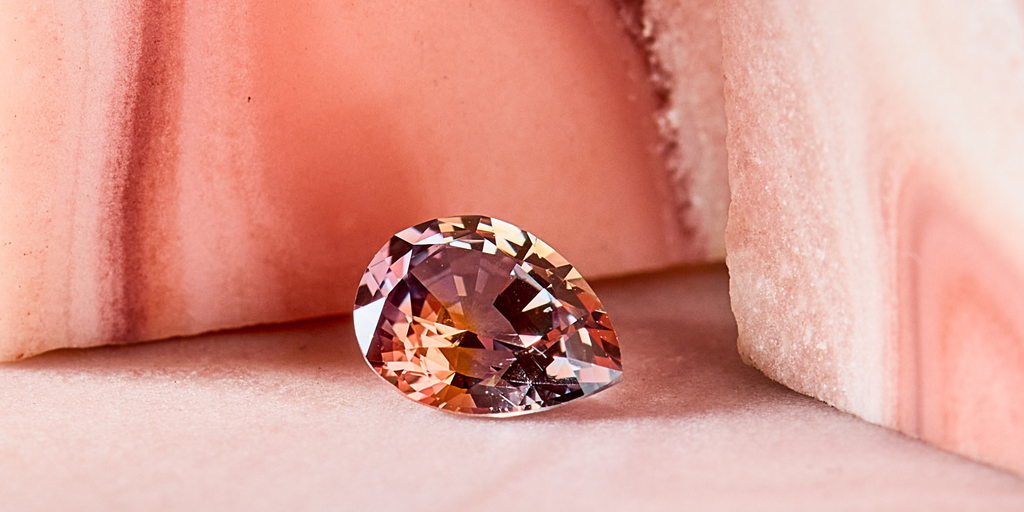
Montana sapphires are sometimes described as blue gemstones, but blue is only the beginning of their color story.
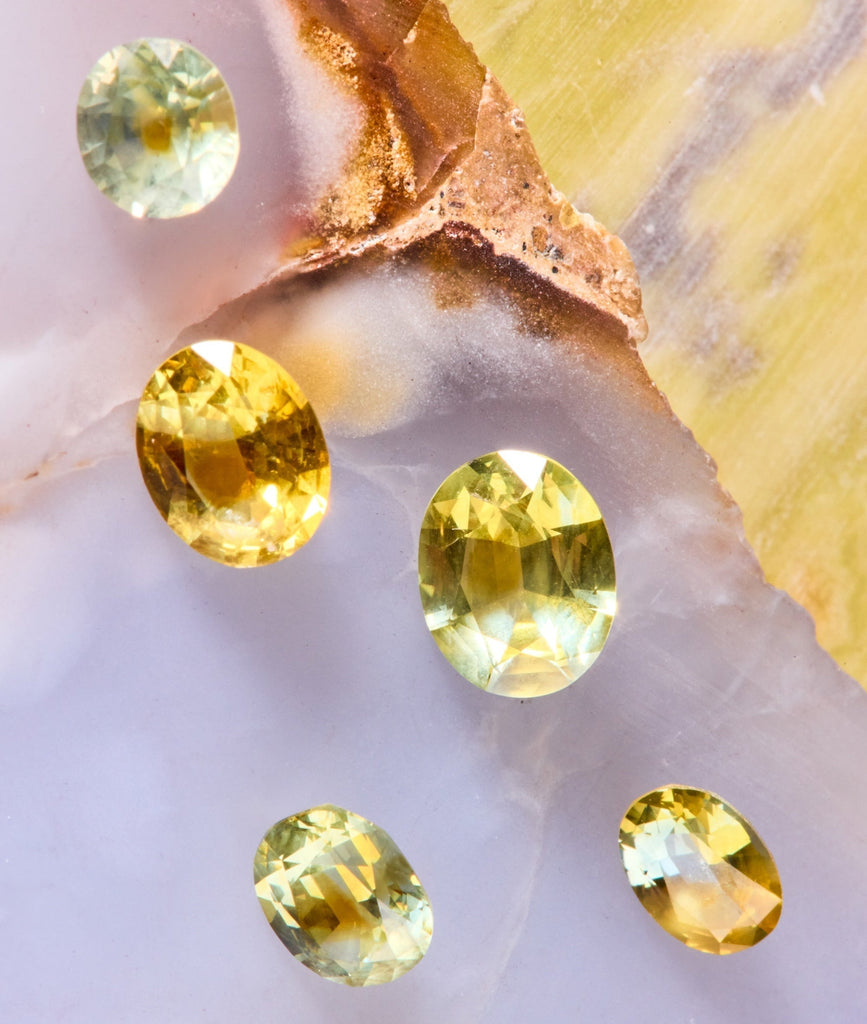
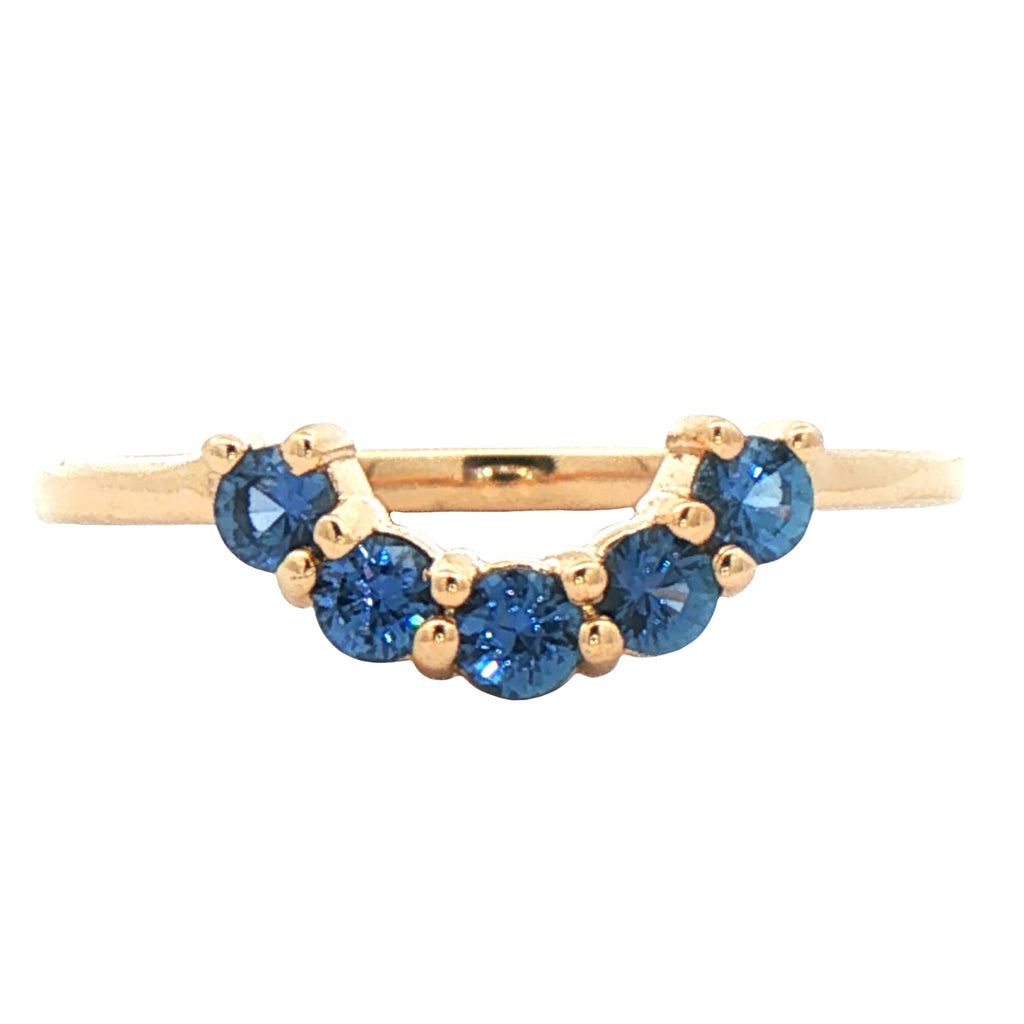
These American-mined stones can appear sky blue, deep blue, teal, green, yellow, lavender, pink and nearly colorless. Some contain two or more colors within a single crystal. Even sapphires found in the same deposit—or the same parcel of rough—can look completely different from one another.
This variation is not an imperfection. It is a visible record of the chemistry, geological conditions and crystal growth that shaped each stone.
Sapphire Begins as a Colorless Mineral
Sapphire is a variety of the mineral corundum, which is composed primarily of aluminum and oxygen. In its purest form, corundum is colorless.
Color develops when minute amounts of other elements become incorporated into the crystal as it grows. These elements may be present in extremely small concentrations, but they affect which wavelengths of light the crystal absorbs and which colors return to our eyes.
In other words, the colors of a Montana sapphire are created by tiny chemical variations hidden inside an otherwise nearly colorless crystal.
Trace Elements Create Different Colors
Different combinations of trace elements can produce different sapphire colors.
Blue sapphire is primarily associated with interactions between iron and titanium. Pink coloration is connected to chromium, while iron and certain structural features within the crystal can contribute to yellow. Green sapphires often display a visual combination of blue- and yellow-producing mechanisms. When several color-producing elements or structures are present together, the resulting color may fall somewhere in between established categories.
This is one reason Montana sapphires are known for nuanced colors that can be difficult to describe with a single word. A stone may be blue with a green undertone, gray-blue with a flash of lavender or pale yellow that shifts toward green in certain light.
The gemstone is not mixing paint. Its color is the combined result of how its internal chemistry interacts with light.
A Crystal’s Environment Can Change While It Grows
A sapphire crystal does not necessarily grow under perfectly consistent conditions.
Temperature, pressure and available chemical elements may change during different stages of crystal formation. As the crystal continues to grow, one area may incorporate a different concentration of trace elements than another. This can create bands, sectors or patches of color known as color zoning.
Some zoning is subtle and becomes visible only when the loose sapphire is examined from certain directions. In other stones, it creates obvious divisions between blue, green, yellow or colorless areas.
When two or more distinct colors remain visible after cutting, the gemstone may be described as a parti-color sapphire.
Rather than seeing this variation as inconsistency, we see it as a map of the crystal’s growth. Each section represents a slightly different moment in the environment that formed it.
Montana Contains More Than One Sapphire Deposit
“Montana sapphire” describes a geographic origin, not one uniform variety of gemstone.
Montana’s major sources include Rock Creek, the Missouri River deposits, Dry Cottonwood Creek and Yogo Gulch. The sapphires from these areas formed within different geological settings and may have different crystal habits, inclusions and trace-element patterns.
Rock Creek, Missouri River and Dry Cottonwood Creek sapphires are generally recovered from secondary deposits. This means their original host rocks weathered away, releasing the durable sapphire crystals into gravel and sediment. Yogo sapphires, by contrast, are mined from a primary deposit where sapphire remains associated with its host rock.
These geological differences help explain why sapphires from one Montana source may have color characteristics that differ from those of another.
Why Yogo Sapphires Often Look Different
Yogo sapphires are especially known for naturally saturated violet-blue to blue color that is often distributed relatively evenly throughout the stone. They generally do not require heat treatment, and gem-quality Yogo material rarely responds significantly to it.
Many sapphires from Montana’s secondary deposits show a broader range of colors and more visible zoning. They may emerge from the ground pale blue, green, yellow, gray or nearly colorless.
This does not mean one deposit is universally better than another. They simply tell different geological stories. Yogo is celebrated for its distinctive, often consistent blue, while deposits such as Rock Creek are beloved for producing an extraordinary spectrum of individual colors.
How Heat Can Change a Montana Sapphire’s Color
Some Montana sapphires are heat treated to improve or alter their color.
Heat does not coat the stone or add a layer of artificial color. Traditional heat treatment changes the way elements and defects already present inside the sapphire interact. The result depends on the stone’s original chemistry, the temperature, the heating time and the atmosphere within the furnace.
In a large study of Rock Creek sapphire, researchers found that many pale blue, pale green and near-colorless stones could be transformed into more saturated blues or yellows. Blue colors were developed under reducing conditions, while yellow colors were more readily produced under oxidizing conditions. Not every sapphire responded predictably or produced a desirable result.
Heat treatment is therefore not a simple formula applied equally to every stone. Two seemingly similar pieces of rough may react differently because their internal chemistry is different.
When treatment is known, it should always be disclosed.
Cutting Also Influences the Color We See
The color present inside a sapphire and the color visible from the top of the finished gemstone are not always identical.
Sapphire is pleochroic, meaning it can display different colors or color intensities when viewed from different crystallographic directions. A cutter must decide how to orient the rough to balance color, shape, clarity and finished weight. The placement of color zones can also influence whether the final stone appears primarily blue, green, yellow or parti-colored.
The depth of the cut matters as well. Light travels through more material in a deeper stone, which can make the color appear more saturated or dark. A shallower stone may appear lighter, although its proportions also affect how successfully light returns to the viewer.
The lapidary is not creating the color, but the decisions made during cutting determine how the sapphire’s existing color is revealed.
Montana Sapphire Color Changes With the Light
A sapphire’s appearance is also influenced by its surroundings.
Daylight, warm indoor lighting and cool artificial lighting contain different proportions of wavelengths. Because sapphire color is produced through selective light absorption, the same gemstone may look more blue outdoors, greener near a window or slightly grayer under warm evening lights. The thickness and orientation of the stone also influence the color perceived by the eye.
For this reason, we recommend viewing a sapphire in several types of light before choosing it for a custom piece. The goal is not necessarily to find a stone that appears exactly the same everywhere, but to understand and appreciate its full range.
No Two Montana Sapphires Are Exactly Alike
The color of a Montana sapphire is shaped by trace elements, crystal growth, geological origin, cutting orientation, potential heat treatment and the light in which it is viewed.
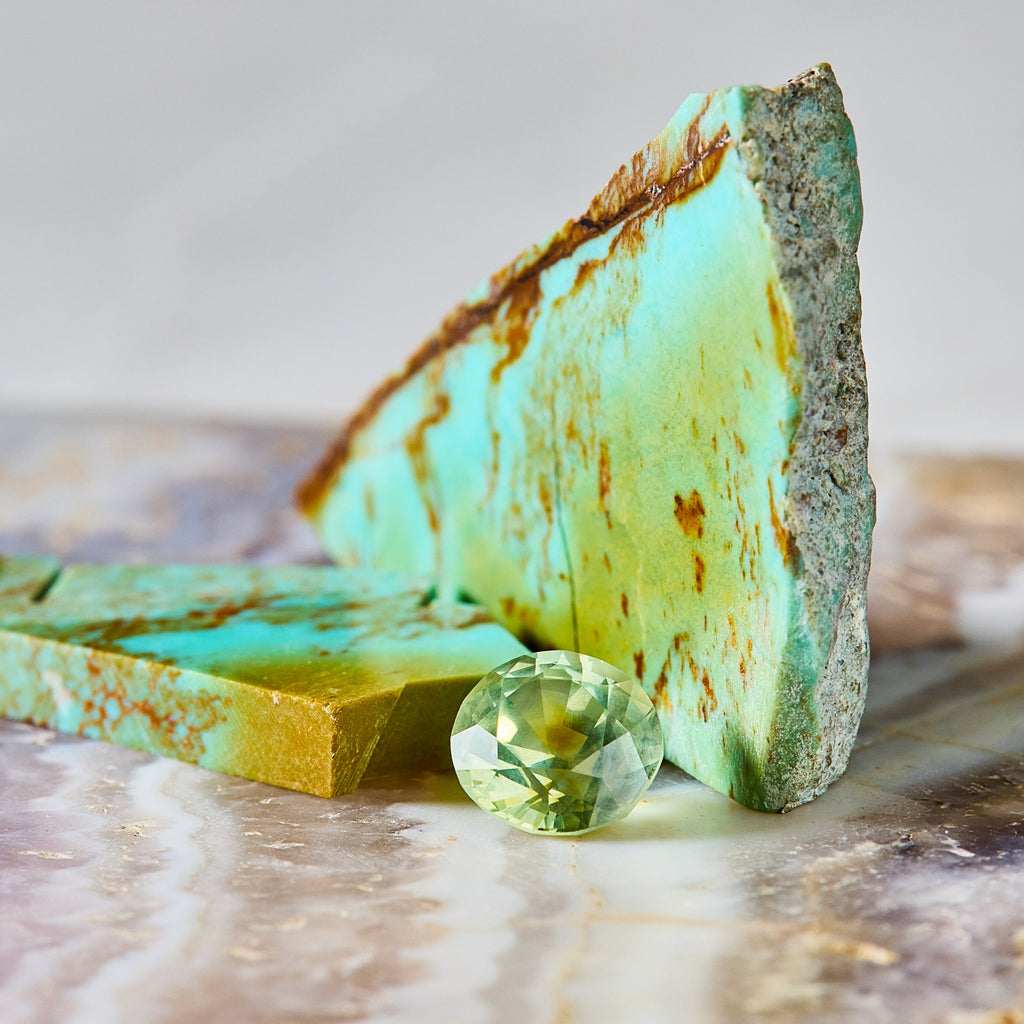
Each stone is a record of many small variables coming together over geologic time. One may hold the blue-green color of an alpine lake. Another may move from mossy green to warm gold. Another may contain a visible boundary between two entirely different hues.
This variation is part of what draws us to Montana sapphires. They do not offer one standardized version of blue. They offer a landscape of color, formed naturally, mined in America and revealed one stone at a time.