The Science of Sparkle: How Gemstones are Faceted
Young In The Mountains has ethical and beautiful gemstones to celebrate your love!
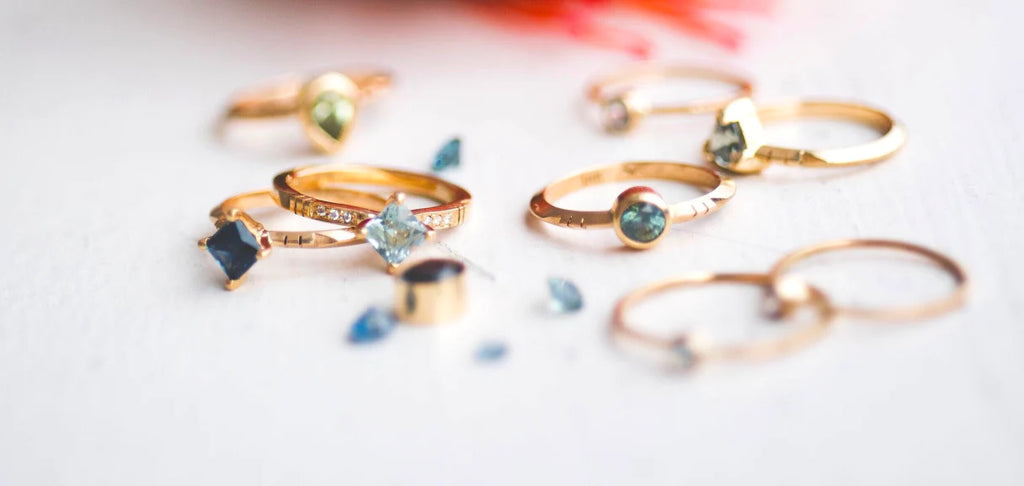
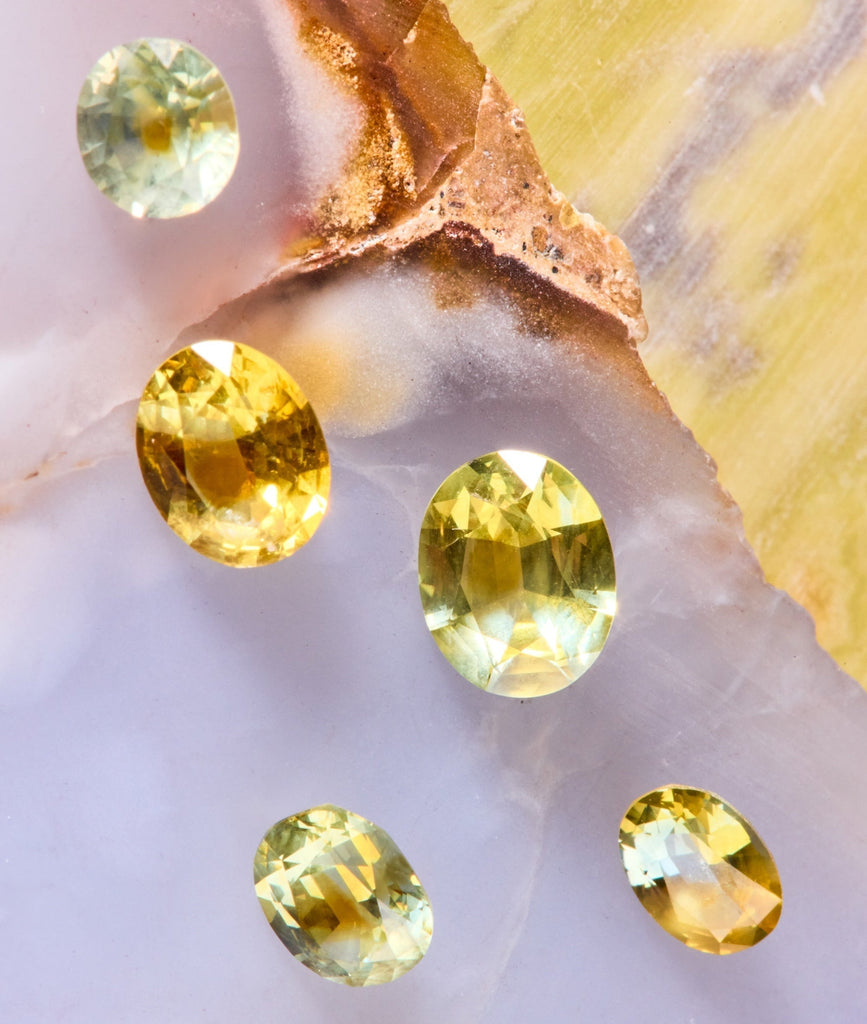
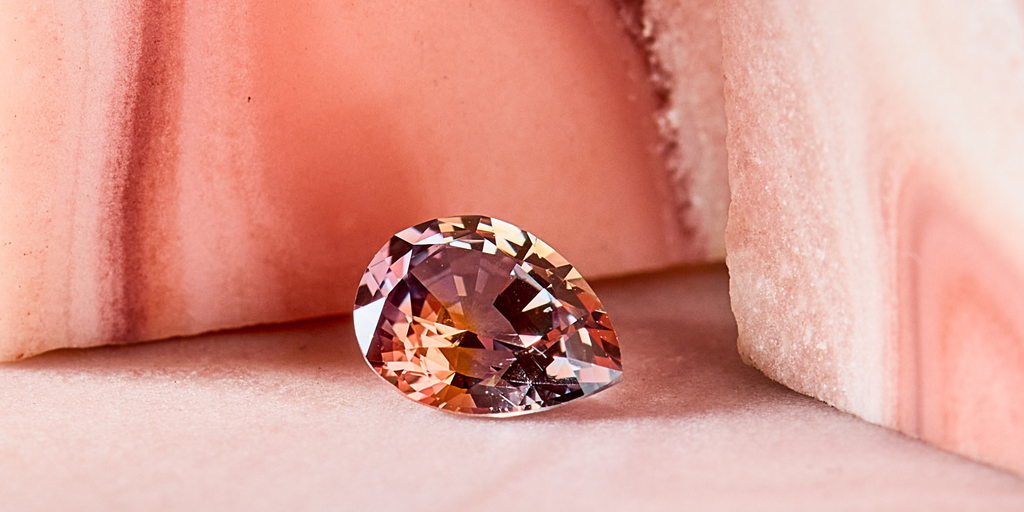
It's amazing to think the sparkling beauties we wear in our jewelry were once rough, dull rocks. This brilliance of gemstones is revealed through a lapidary process called faceting, a process of cutting and polishing flat surfaces on a gemstone to create a stunning play of light and color.
Faceting is both an art and a science that requires skill, precision, and creativity.
Let's explore faceting in a bit more detail to understand why it's such a fascinating process.
How to Facet a Gemstone Step by Step
Faceting a gemstone is a challenging task. It can be time-consuming and requires a great deal of patience, precision, and attention to detail.
The basic steps involved in faceting a gemstone are:
Selecting a rough stone
The first step is to choose a suitable rough stone for faceting. You must consider the stone's hardness, color, clarity, shape, size, and cost. You must also inspect the stone for any cracks, inclusions, or flaws that might affect its quality or value.
Dopping
The next step is to attach the stone to a metal rod called a dop stick using wax or glue. This allows you to hold and rotate the stone while cutting and polishing it on a faceting machine.
Performing
The third step is to shape the stone into a rough outline of the final design using a coarse grinding wheel or lap. This removes any excess material and prepares the stone for cutting.
Cutting
The fourth step is to cut the facets on the stone using a finer grinding wheel or lap. You need to follow a specific pattern or diagram that shows the number and arrangement of facets on the stone. You also need to adjust the angle, speed, pressure, and direction of the cutting according to the type and shape of the stone.
Polishing
The fifth step is to polish the facets on the stone using a softer wheel or lap coated with polishing compounds such as diamond powder or oxide. This gives the stone a smooth and shiny surface that reflects light.
Inspecting
The final step is to inspect the finished stone for defects or errors using a magnifying glass or loupe. You must check if the facets are symmetrical, aligned, polished, and free of scratches or marks.
The Importance of Faceting in Gemstone Value
Faceting can increase the value of a gemstone by enhancing its brilliance, sparkle, and overall appearance.
- Brilliance is the amount of light a gemstone reflects to the viewer.
- Sparkle is the scintillation or flashes of light that occur when a gemstone moves.
Both brilliance and sparkle depend on how well the facets are aligned and angled to capture and reflect light.
Faceting can also affect the color of a gemstone by influencing how light interacts with its chemical composition and crystal structure.
Some gemstones have pleochroism, which means they show different colors depending on the viewing angle. Faceting can help bring out the best color or hide unwanted colors in pleochroic gems.
It can also enhance or diminish other optical phenomena in gemstones, such as:
- dispersion (fire),
- asterism (star effect),
- chatoyancy (cat's eye effect),
- iridescence (rainbow effect),
- adularescence (moonstone effect), and
- labradorescence (labradorite effect).
Faceting helps to showcase these effects by choosing the right shape, orientation, and number of facets for each gemstone.
A gemstone's number and arrangement of facets can greatly affect its appearance, value, and light performance.
Some of the most popular faceting styles include:
Brilliant cut
This style has many triangular or kite-shaped facets that radiate from the center of the stone. It maximizes brilliance and sparkle by reflecting and dispersing light in all directions.
It is commonly used for round-shaped stones such as diamonds.
Step cut
This style has fewer rectangular or trapezoidal facets that run parallel to the edges of the stone. It emphasizes clarity and color by allowing more light to pass through the stone.
It is commonly used for square-shaped stones such as emeralds.
Mixed cut
This style combines elements of both brilliant cut and step cut by having different types of facets on the crown (top) and pavilion (bottom) of the stone. It balances brilliance, sparkle, clarity, and color by reflecting and transmitting light in various ways.
It is commonly used for oval-shaped stones such as sapphires.
Rose cut
This style has fewer triangular facets, forming a dome-shaped crown with no pavilion. It creates an antique or vintage look by giving the stone a soft glow rather than a bright sparkle.
It is commonly used for irregular-shaped stones such as garnets.
The importance of faceting in gemstone value cannot be overstated. A well-faceted gemstone can make a huge difference in its beauty and appeal.
The Gem cutter
The skill and experience of the gemstone cutter greatly influence the final quality and value of a faceted gemstone.
A skilled cutter (also known as a lapidary) can create precise and symmetrical designs that optimize the light performance of the stone. They can also avoid or minimize defects or errors that might ruin or damage the stone or cause flaws in its appearance or performance.
However, faceting also involves some trade-offs between weight retention and quality enhancement. A gem cutter has to decide how much material to remove from a rough gemstone to achieve the best possible cut.
Gemstone faceting is an amazing process that transforms rough gems into dazzling jewels. It requires knowledge, skill, creativity, and passion to create beautiful and valuable faceted gems.
If you are searching for ethically sourced and made jewelry, there is only one place to go – Young In The Mountains. Visit our store today!