Parti-Color Montana Sapphires: Where Geology Learns to Paint
Parti-color Montana sapphires are tiny landscapes of science and color. Formed through trace elements, crystal growth, and visible color zoning, these gems can hold blue, green, yellow, violet, and golden tones within a single stone. Rock Creek, near Philipsburg, Montana, is the deposit most associated with this expressive, multi-colored sapphire material.
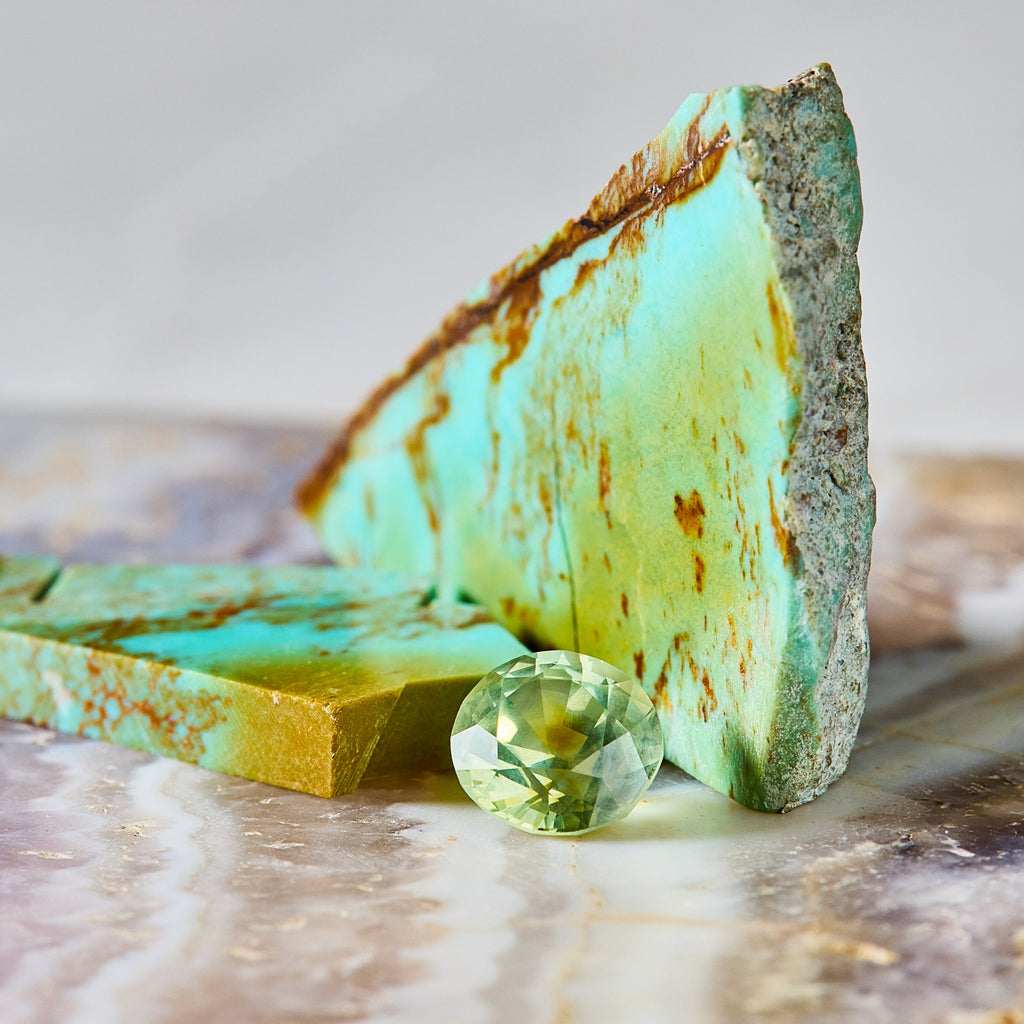
A parti-color sapphire is a sapphire that refuses to be just one thing.
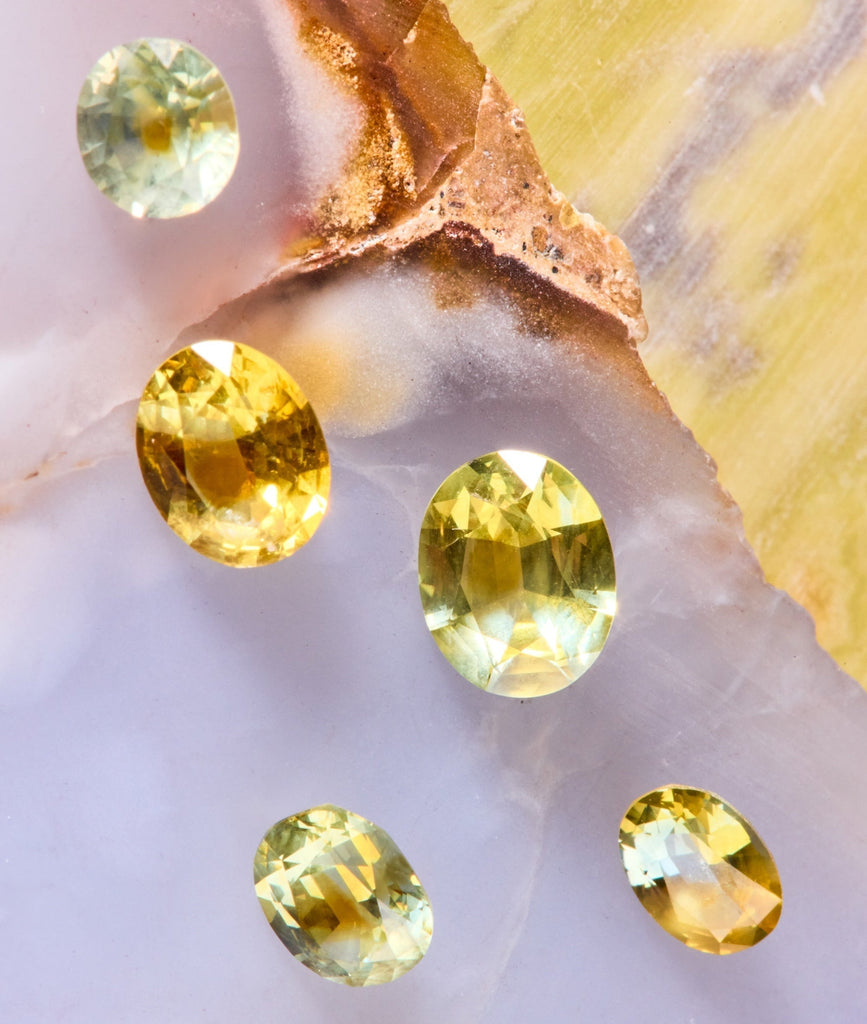
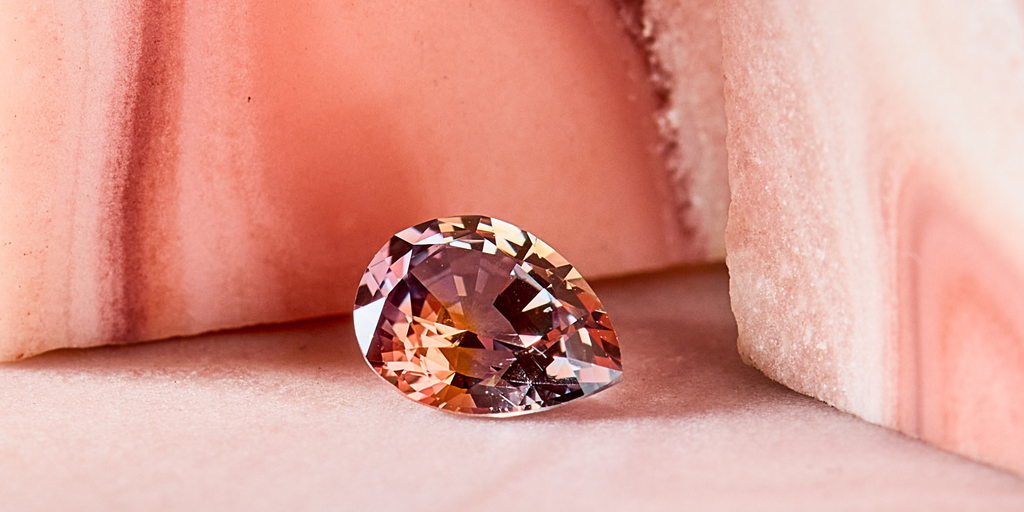
Instead of holding a single, even field of blue, green, yellow, or pink, a parti-color sapphire carries two or more visible colors within the same stone. One side may lean oceanic blue, another moss green. A golden center may glow beneath a violet edge. Some appear like watercolor washes; others are divided by crisp internal horizons, as though the gem is remembering separate chapters of its formation.
Scientifically, sapphire is the mineral corundum, aluminum oxide, with the chemical formula Al₂O₃. Red corundum is ruby; corundum in every other color is sapphire. GIA lists sapphire as a Mohs 9 gem, making it one of the hardest natural gemstones used in jewelry. It also notes that “fancy sapphires” can occur in violet, green, yellow, orange, pink, purple, and intermediate hues.
What Makes a Sapphire Parti-Color?
The short answer is color zoning also knows as partition of color- parti color.
Color zoning happens when color is distributed unevenly inside a crystal. In sapphires, this can create distinct zones of different hue, tone, or saturation. In a parti-color sapphire, that zoning is visible and beautiful enough to become the point of the stone rather than something to hide.
GIA describes parti-colored sapphires as stones showing different colors such as blue and orange, green and blue, and other combinations created by visible color zoning. It also notes that many natural gems show some degree of zoning, and that certain gems are valued specifically because that zoning creates striking patterns.
In Montana sapphires from secondary deposits, this phenomenon can be especially expressive. GIA reports that sapphires from Montana’s secondary sources naturally occur in a wide range of hues, including blue, green, yellow, orange, pink, and purple. The same study notes that parti-colored sapphires are frequently observed, especially in heated stones with a yellow or orange core and a blue, green, pink, or violet rim.
That last detail matters: not every parti-color sapphire is unheated, and not every parti-color effect forms in exactly the same way. In Montana material, some color may be natural as mined, while heat treatment can also influence color, saturation, and the way certain zones appear. Good sourcing means disclosing that treatment status clearly.
The Chemistry Behind the Color
Sapphire color comes from trace elements and crystal chemistry. Pure corundum is colorless. It becomes blue, green, yellow, pink, violet, or orange because tiny amounts of other elements or defects interact with light.
In blue sapphire, one major color mechanism is iron-titanium intervalence charge transfer, often written as Fe²⁺-Ti⁴⁺ IVCT. In simpler terms, electrons interact between iron and titanium ions in the crystal structure, absorbing certain wavelengths of light and allowing us to perceive blue. GIA specifically identifies the Fe²⁺-Ti⁴⁺ intervalence charge transfer band as responsible for blue color in Yogo sapphire.
Yellow and orange tones can involve different mechanisms. In its study of secondary Montana sapphires, GIA describes how oxidizing heat treatment can create a “trapped-hole” absorption band, producing an orange core in a Rock Creek sapphire sample after heating.
This is where science becomes almost painterly. A sapphire crystal grows in layers and sectors. Trace elements may not enter each part of the crystal equally. Heat, oxygen, titanium, iron, magnesium, vacancies, and inclusions can each play a role in how color appears. The finished gem is not painted from the outside. Its color is built into the architecture of the crystal itself.
Which Montana Deposit Is Most Known for Parti-Color Sapphires?
The most defensible answer is Rock Creek, near Philipsburg, Montana, also known in the trade as the Gem Mountain area.
This does not mean Rock Creek is the only Montana source where color zoning or parti-color sapphires can occur. GIA’s 2023 study discusses parti-colored sapphires across Montana’s secondary deposits: Rock Creek, Missouri River, and Dry Cottonwood Creek. It also notes that faceted stones from these secondary deposits can overlap significantly in their gemological characteristics and cannot always be reliably separated from one another.
But when people in the modern jewelry world talk about the expressive teal, green, golden, and parti-color look of Montana sapphire, Rock Creek is the deposit most often associated with that story.
There are good reasons for this. GIA states that Rock Creek has produced more sapphire than any other Montana deposit, including Yogo Gulch, “likely eclipsing all of them combined by nearly a factor of 10,” with at least 70 metric tons mined from the Rock Creek area. National Jeweler also describes Rock Creek sapphires as occurring in a variety of colors, including blue, green, orange, yellow, purple, and pink. Rapaport’s 2025 coverage of Montana sapphire likewise describes Rock Creek as the state’s largest sapphire mine and notes that its gems come in all sizes and colors, including parti-colors.
So the careful answer is this: Rock Creek is the Montana deposit most known in today’s jewelry market for colorful and parti-color Montana sapphires, especially because of its volume, variety, and strong modern presence.
Why Not Yogo?
Yogo sapphires are legendary, but for a different reason.
Yogo Gulch is Montana’s only primary sapphire deposit, meaning the sapphires are mined from their host rock rather than from alluvial gravel deposits. GIA describes Yogo sapphires as having desirable even blue to violet or purple color, high clarity, and no need for heat treatment.
Most importantly for this topic, GIA identifies the distinct lack of color zoning as a defining characteristic of blue Yogo sapphires. Violet-to-purple Yogo stones may show minimal zoning, but the classic Yogo identity is uniform, natural blue.
In other words: Yogo is known for steadiness. Rock Creek is known for range.
Yogo is the clear mountain lake. Rock Creek is the changing sky above it.
Why Parti-Color Sapphires Feel So Personal
Parti-color sapphires are beloved because they show evidence of becoming. Their beauty is not perfectly uniform; it is layered, directional, and alive. One gem might hold blue and green like a Montana river under pine shadow. Another might hold gold and lavender like late light on dry grass. Their color zoning is not a flaw when chosen intentionally. It is the story.
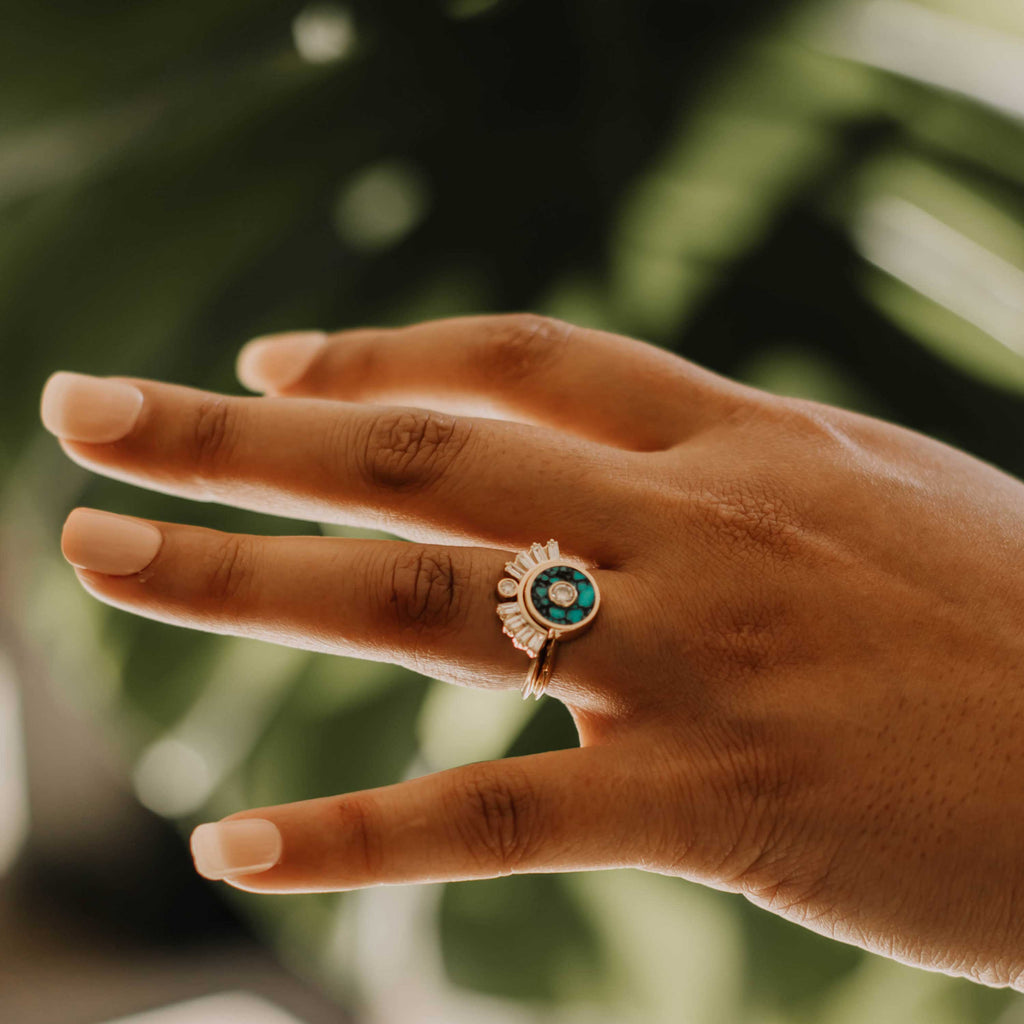
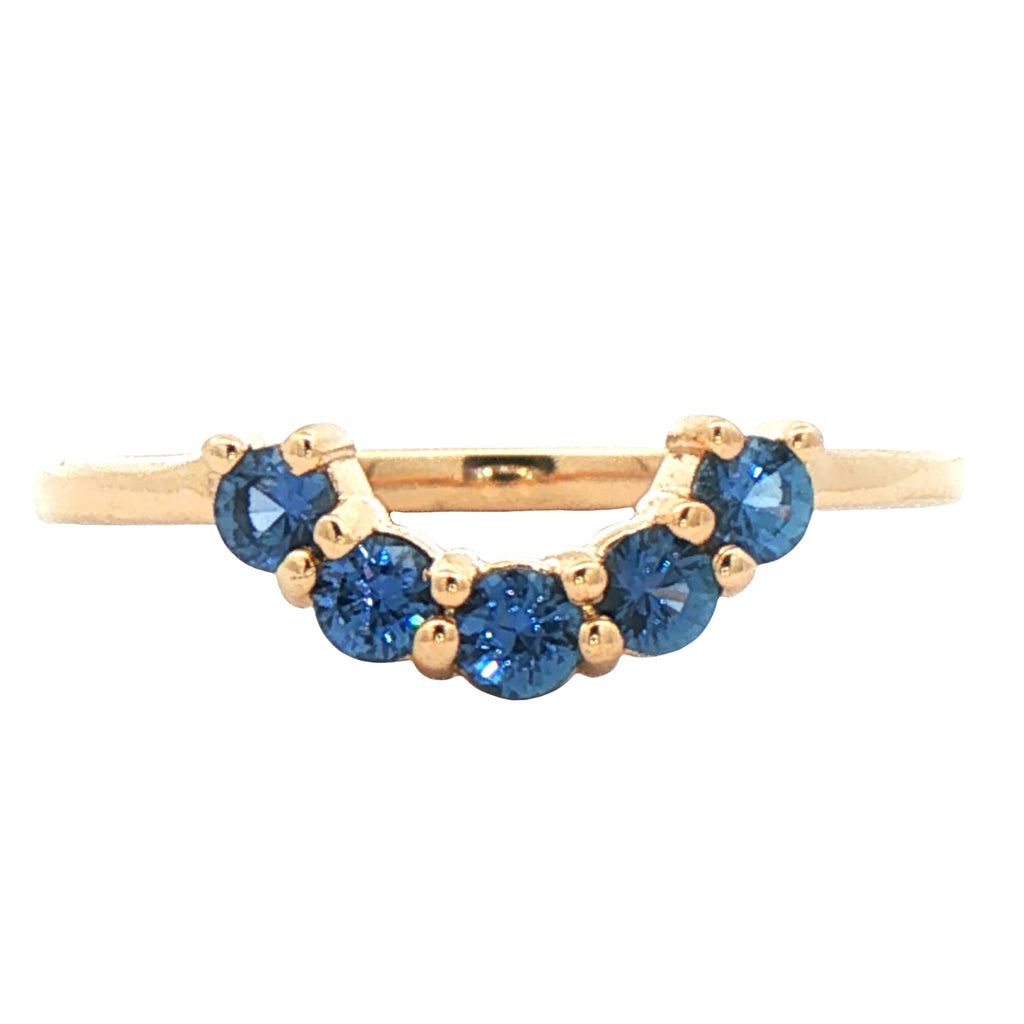
For designers like Young In The Mountains, these sapphires invite a different way of working. The stone is not a blank center to be surrounded by metal. It already has movement. It already has composition. The cut, setting, and gold color can either quiet that movement or let it sing.
For collectors, a parti-color sapphire offers something deeply specific: a gem that could not be repeated in exactly the same way. Even two sapphires from the same deposit can hold color differently because their growth histories, trace element distributions, inclusions, and treatment responses are individual.
This is the scientific romance of parti-color Montana sapphire. It is chemistry, pressure, time, erosion, and human cutting skill. It is also a small piece of landscape held in crystal form.
A parti-color sapphire is not simply blue, green, yellow, or violet.
It is the meeting place.