Why Do Montana Sapphires Vary So Much in Color?
When I source Montana sapphires from miners, I am rarely looking for one “perfect” shade of blue. I’m looking at the individual stone, including how its color moves, whether it stays lively in different lighting, how the cut brings that color forward, and ultimately whether it feels right for the client and the piece we are designing.
When I source Montana sapphires from miners, I am rarely looking for one “perfect” shade of blue. I’m looking at the individual stone, including how its color moves, whether it stays lively in different lighting, how the cut brings that color forward, and ultimately whether it feels right for the client and the piece we are designing.
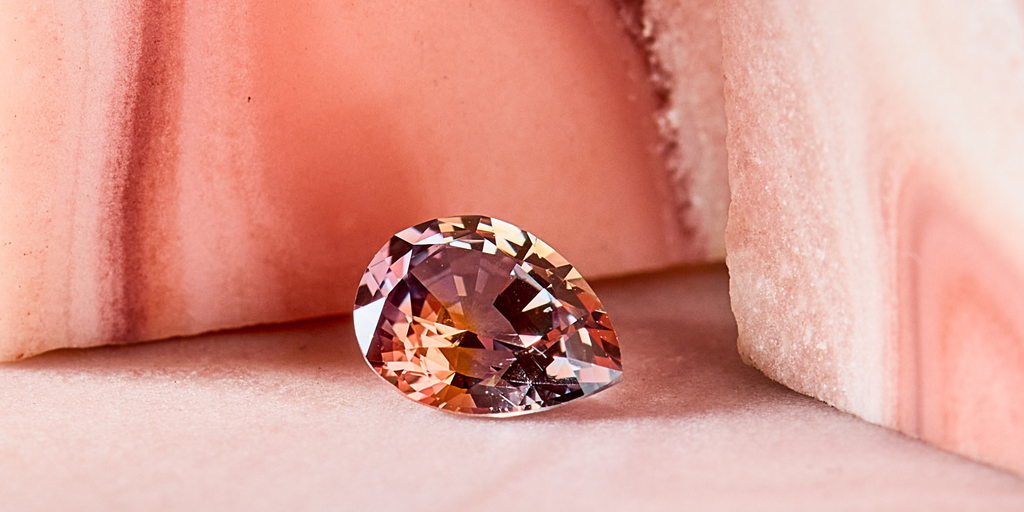
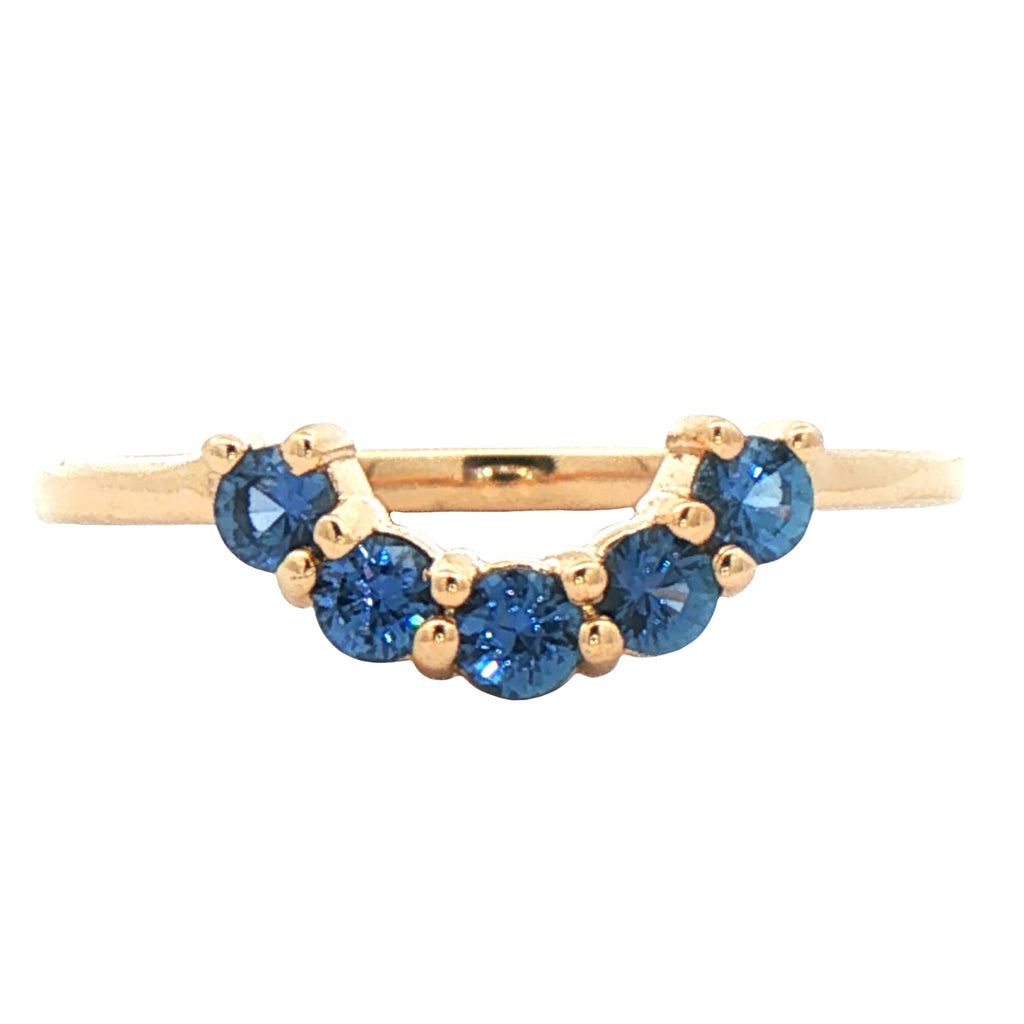
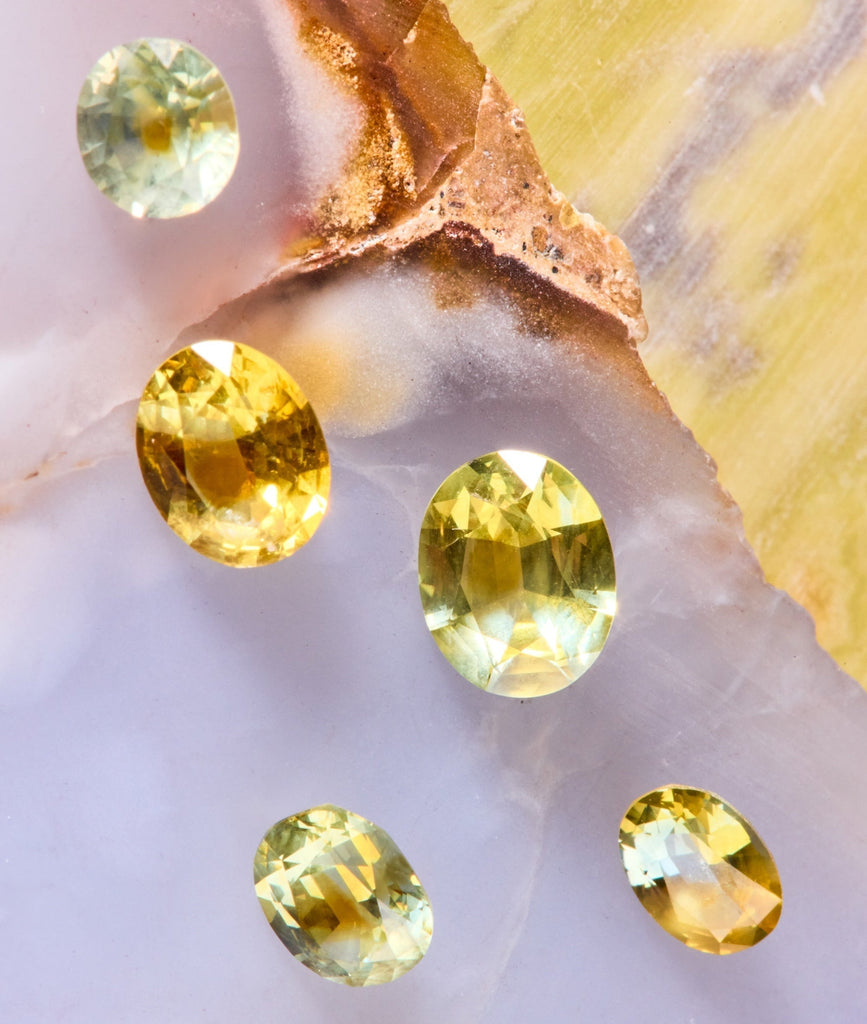
That is one of the things that makes Montana sapphires so different from what many people imagine when they hear the word sapphire. They can be deep blue, icy blue, teal, sea green, mossy green, yellow, lavender, pink or a combination of colors within a single stone. GIA has documented Montana sapphires across blue, green, yellow, orange, purple and pink color ranges, as well as parti-colored material.
For me, that variation is not a flaw. It is the reason I am drawn to them.
The Science Behind Sapphire Color
At its core, sapphire is corundum, a mineral that would be colorless in its purest form. Tiny amounts of other elements incorporated into the crystal while it forms are responsible for much of the color we see.
Iron and titanium, for example, are important contributors to blue sapphire. Even very small concentrations can have a dramatic effect on color. Other trace elements and combinations of elements can contribute to greens, yellows, pinks and other shades. GIA notes that most gem corundum is actually colored by a combination of multiple color-causing mechanisms rather than one element acting alone.
That means the color of a sapphire is essentially a record of the conditions in which that crystal grew.
And Montana did not produce all of its sapphires in one single geological environment.
“Montana Sapphire” Does Not Mean One Mine
Another reason for the variation is that Montana contains several distinct sapphire deposits.
Some of the best-known sources include Rock Creek, the Missouri River deposits, Dry Cottonwood Creek and Yogo Gulch. These deposits have different geological histories and can produce noticeably different material.
This matters when I am sourcing.
I’m not simply looking at a tray labeled Montana sapphire. I’m paying attention to where the stones came from, what their natural characteristics are and how those characteristics fit the jewelry we are trying to make.
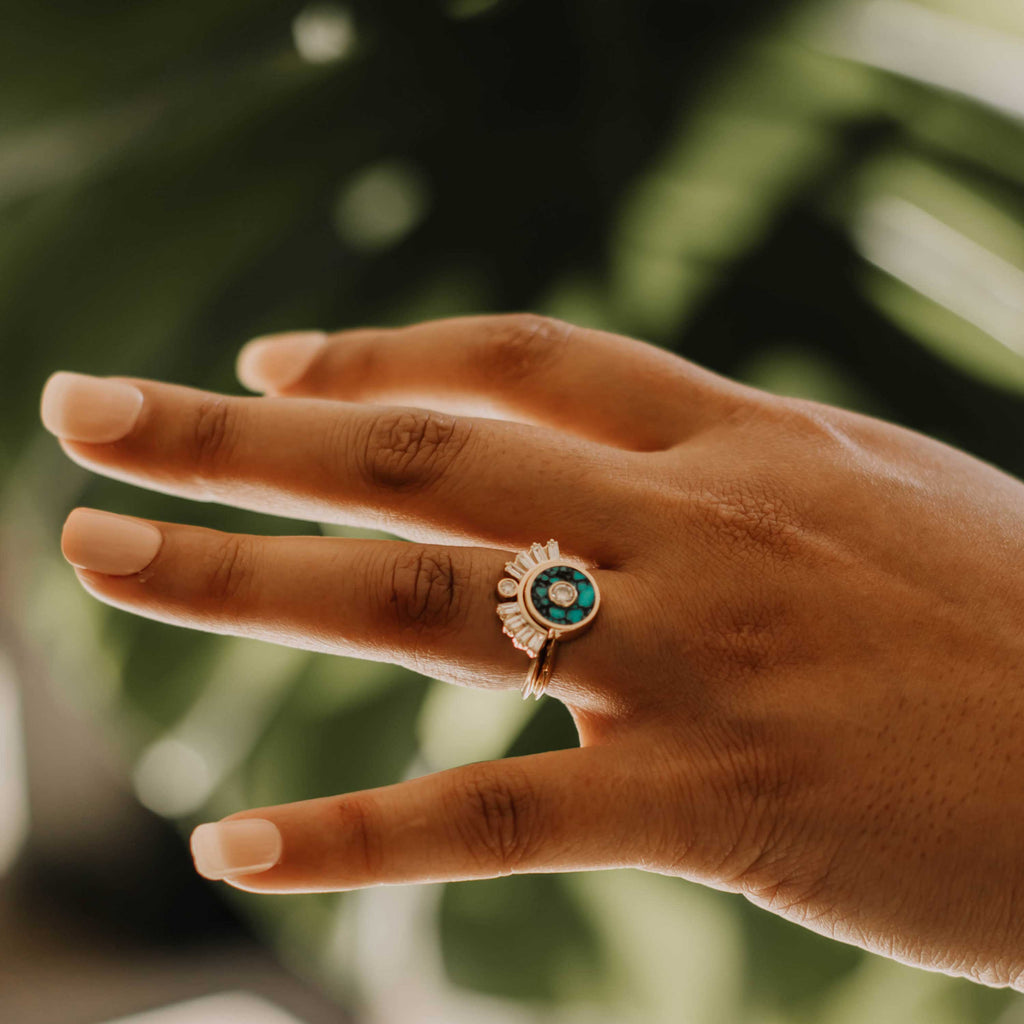
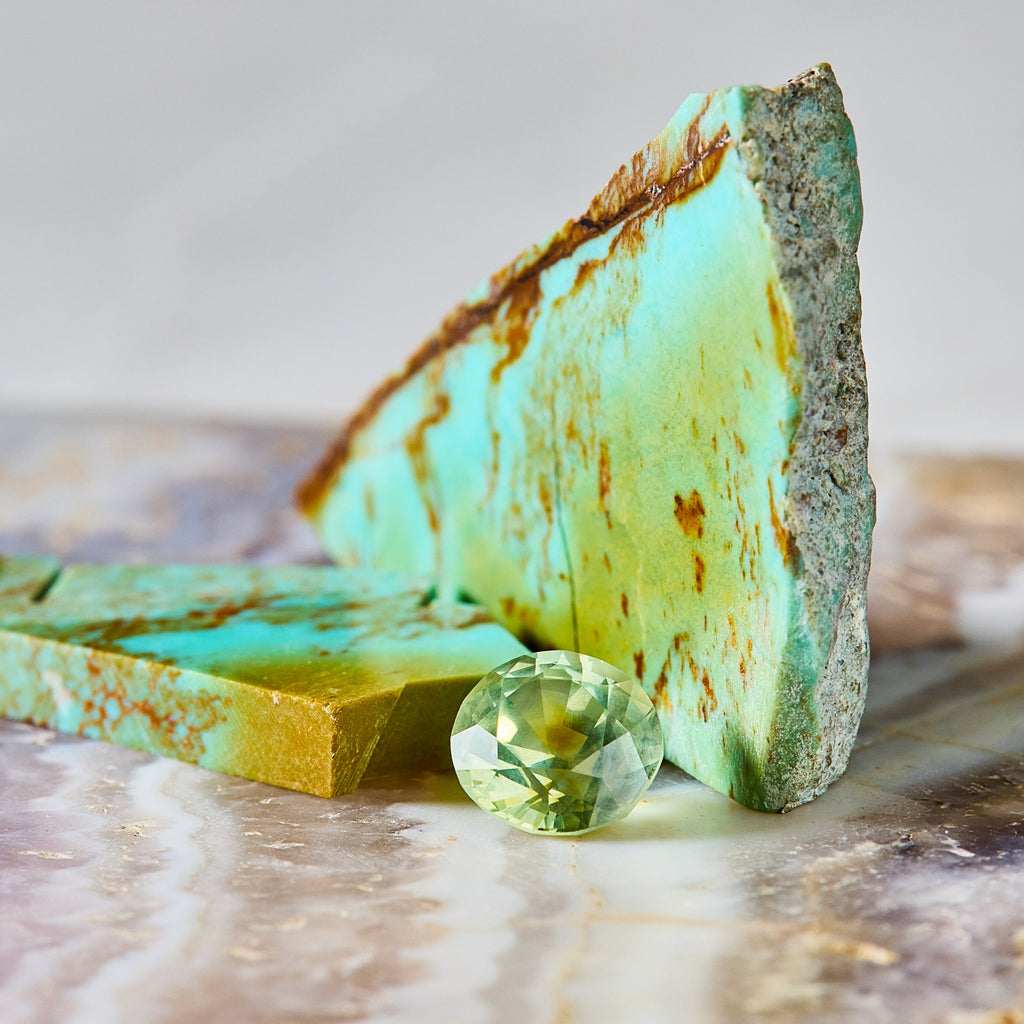
A soft green sapphire might be incredible next to American-mined turquoise. A cool blue-green stone might come alive against yellow gold. A parti-color sapphire containing both blue and yellow may become the entire reason a ring exists.
The stone often tells us where the design should go.
Why One Sapphire Can Look Blue, and Then Green
This is something clients notice all the time.
A Montana sapphire can look distinctly blue in one photograph, more green in another and teal when you take it outside. Color can shift between dark mauve to a fire like pink as well.
Some of that comes from pleochroism, an optical property of sapphire that means the crystal can display different colors when viewed in different directions. Blue sapphires commonly show blue-green and violet-blue components, and the way a cutter orients the crystal can influence which colors dominate when you look at the finished stone.
Lighting matters too.
GIA has documented Montana sapphires that show a measurable change in appearance between incandescent lighting and daylight.
This is why, when I’m selecting a sapphire for a client, I care about more than the perfect photograph.
A gemstone lives on your hand, not in a light box.
I want to understand how it behaves as you move through your actual life, outside, indoors, near a window, at dinner, in warm evening light. Some of the stones I find most interesting refuse to stay one single color.
Cut Can Completely Change How We Experience the Color
Two pieces of sapphire rough with similar chemistry can look surprisingly different once they are cut.
The cutter has to decide how to orient the crystal, how deep the stone should be and where the facets should sit. Those decisions affect brightness, saturation and which direction of color the viewer sees most strongly.
This is particularly important with Montana material because many Montana sapphires occur in lighter or pastel colors and can show noticeable pleochroism. Fine cutting can make a substantial difference in how that color presents face-up.
When I am selecting stones for a client, I am therefore looking at much more than carat weight or measurements.
I’m looking for life.
Does the stone return light? Does the color feel rich without going dark? Is there something unexpected happening inside it? Does the shape work with the design? And most importantly, is there something about that particular sapphire that keeps pulling us back to it?
What About Heat Treatment?
Heat treatment is also part of the Montana sapphire story.
Many sapphires from deposits such as Rock Creek occur naturally in pale blue, pale green or nearly colorless tones. Controlled heating can alter the way trace elements interact inside the crystal and intensify or change the resulting color. GIA's extensive research on Rock Creek material found that heat treatment can produce strongly saturated blues and yellows from much paler rough.
That does not mean every Montana sapphire is heated.
Yogo sapphires, for example, are particularly famous for coming out of the ground with an attractive blue to violet-blue color and are generally not heat treated.
Treatment is simply another characteristic of the individual gemstone, and it should be disclosed rather than treated as something mysterious.
How I Select Montana Sapphires for Our Clients
When a client is choosing a sapphire with us, I don't think the goal should be finding the stone that looks most like everyone's idea of a traditional sapphire.
I think the goal is finding your sapphire.
Sometimes that is a saturated blue.
Sometimes it is a strange greenish teal that changes throughout the day.
Sometimes it has two distinct colors running through it, and if we are lucky maybe 3 or 4 colors!
Sometimes the client thinks they want blue until I put a smoky green Montana sapphire next to a piece of turquoise or variscite and suddenly the entire project changes direction.
Because I source these stones directly from miners, selecting a sapphire feels less like choosing a standardized material and more like meeting individual stones as they come out of the American landscape.
There is variation. There is unpredictability. And there are colors that would be difficult to reproduce even if we tried.
That is exactly what I want from a natural gemstone.
At Young in the Mountains, we celebrate color rather than trying to standardize it. A Montana sapphire does not have to look like every sapphire that came before it. In fact, the ones that don't are often the most interesting.
Explore our Montana sapphires and Montana sapphire rings, or work with us to select a stone for a custom piece.